·1 min read
TQQQ's Largest Surge in History
This current month and a half surge in TQQQ is the strongest in its history.
Read →Insights on systematic investing, market regimes, and rules-based portfolio management.
This current month and a half surge in TQQQ is the strongest in its history.
Read →
Gold is down 14% from its peak—the second worst drawdown in the model's history. Here's what the numbers say and why it feels worse than it is.
Read →
A deep dive into whether the Market Regime model's edge is durable or dependent on lucky trades and favorable timing.
Read →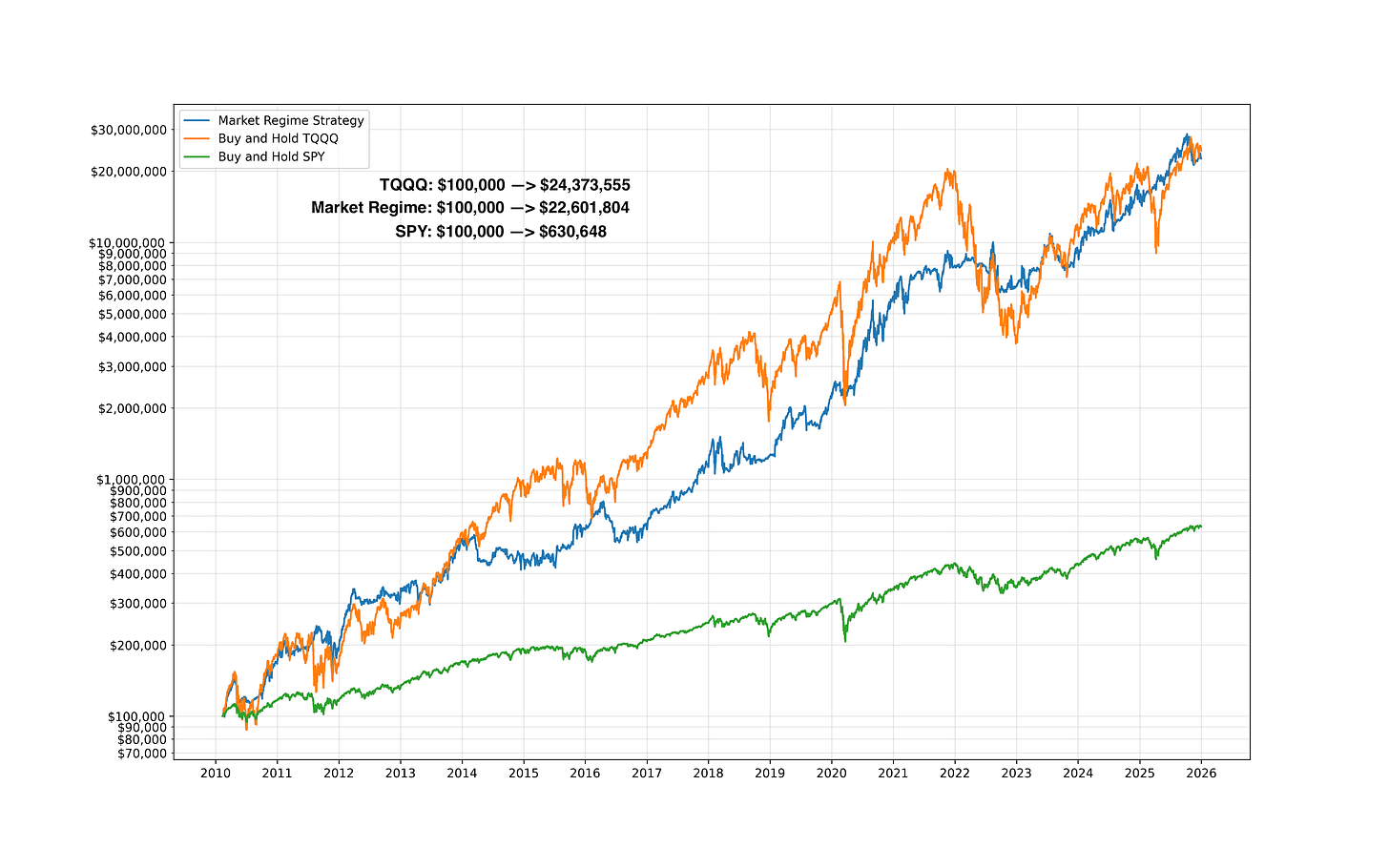
Summing up the Market Regime model performance over 15+ years: TQQQ-like returns with SPY-like drawdowns.
Read →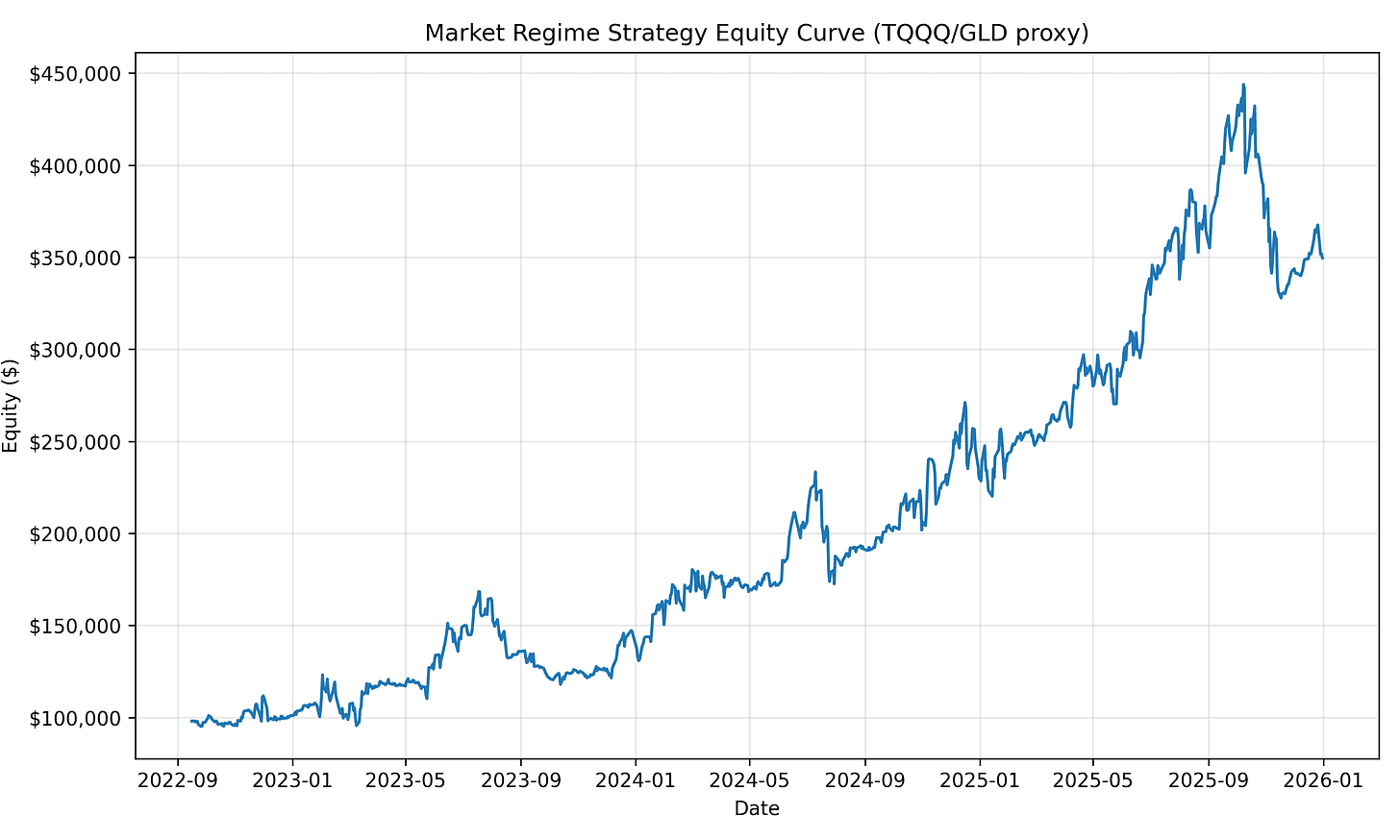
How the Market Regime model navigated the inflation peak, AI rally, and trade wars with +256% returns.
Read →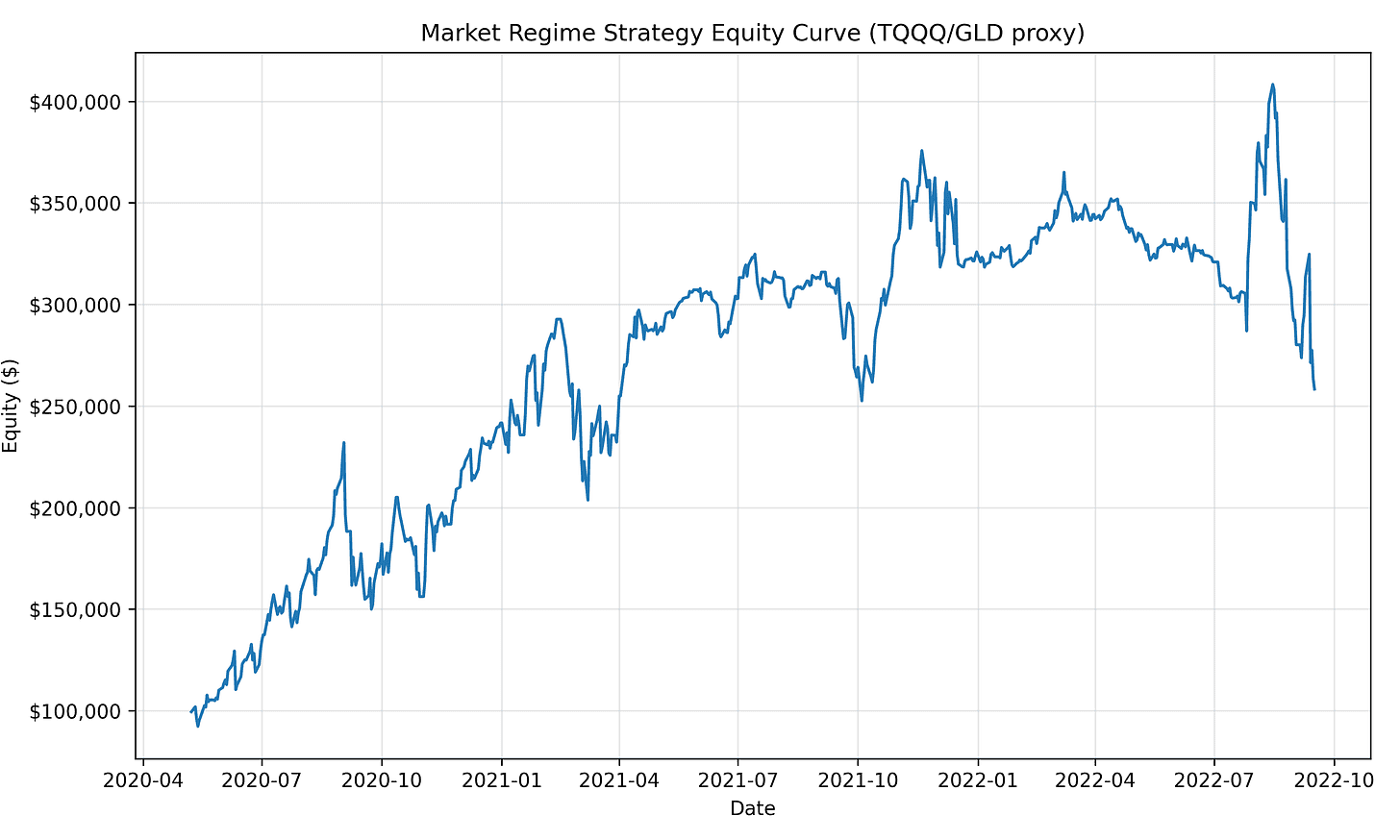
How the Market Regime model navigated the post-COVID melt-up and inflation shock with +160% returns.
Read →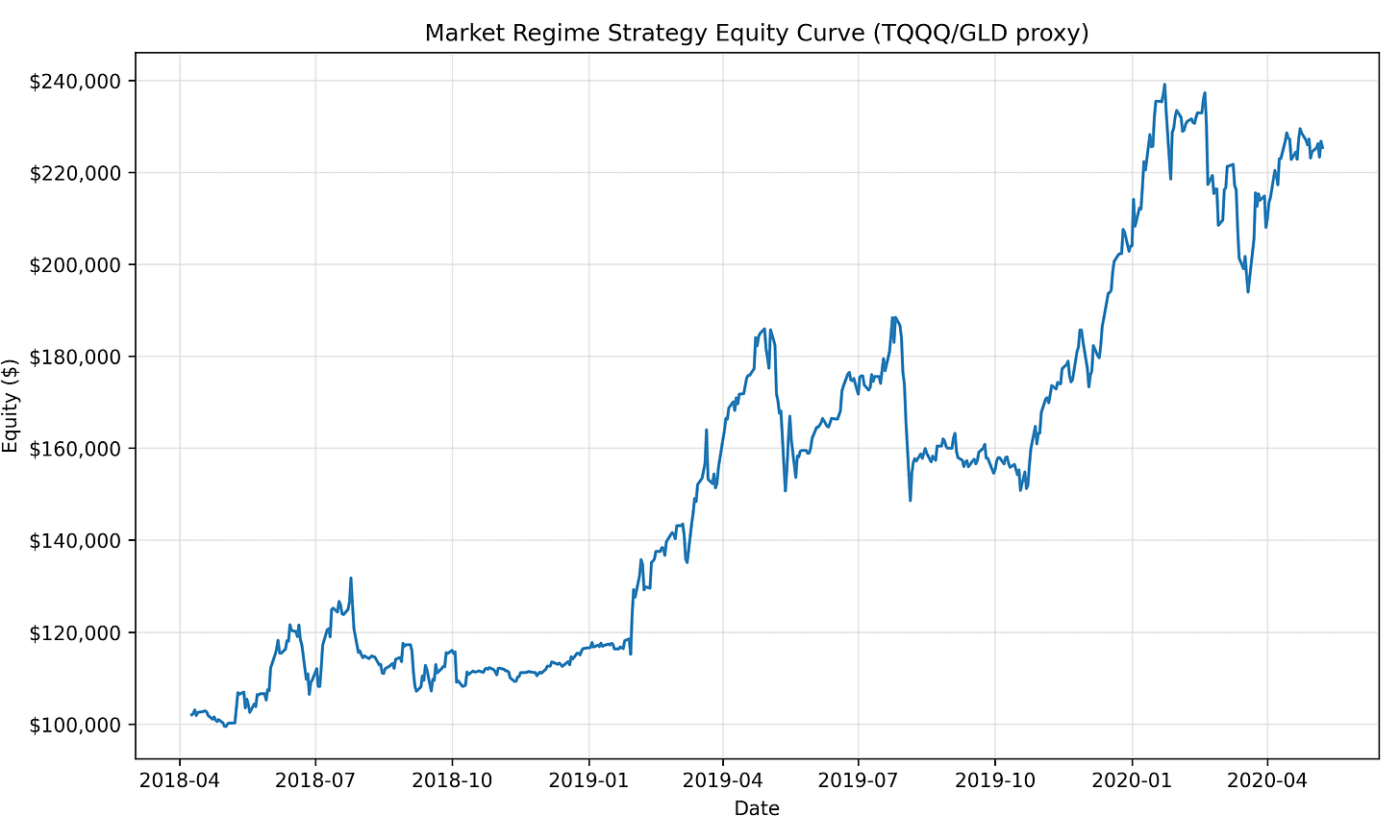
How the Market Regime model navigated trade wars, the Q4 2018 crash, and the COVID pandemic with +121% returns.
Read →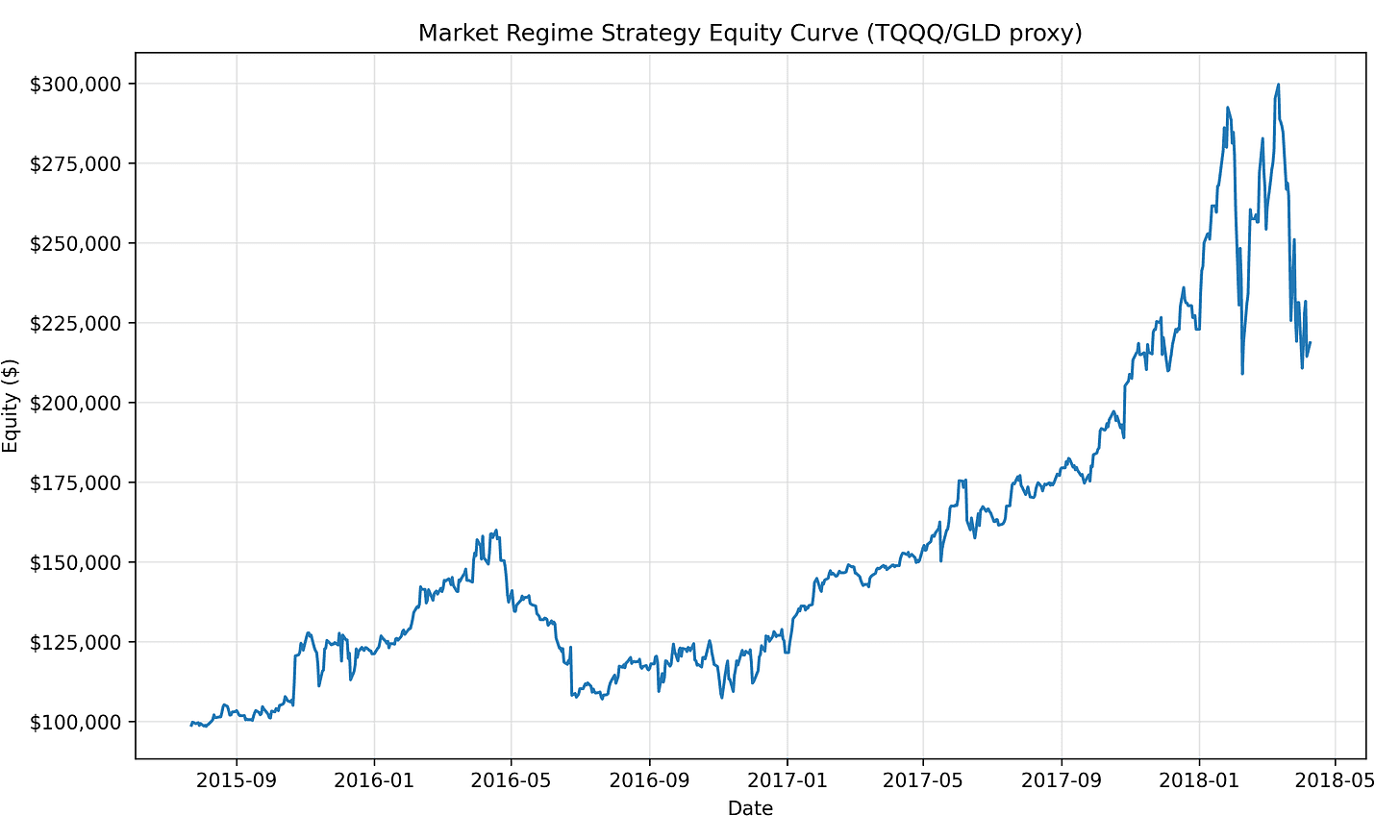
How the Market Regime model navigated the China crash, Brexit, the 2017 melt-up, and Volmageddon with +121% returns.
Read →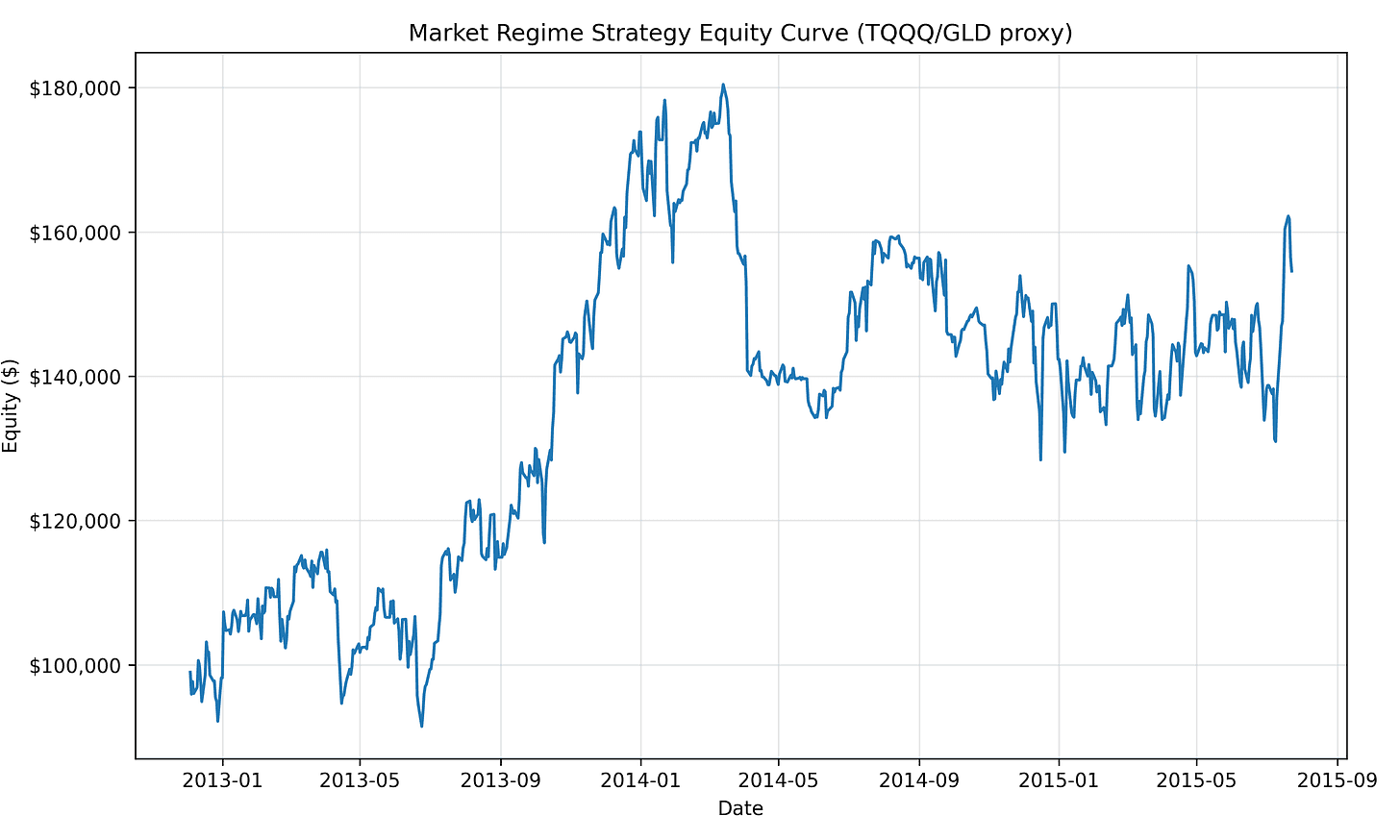
How the Market Regime model navigated the Taper Tantrum, oil collapse, and topping process with +56% returns over 2.6 years.
Read →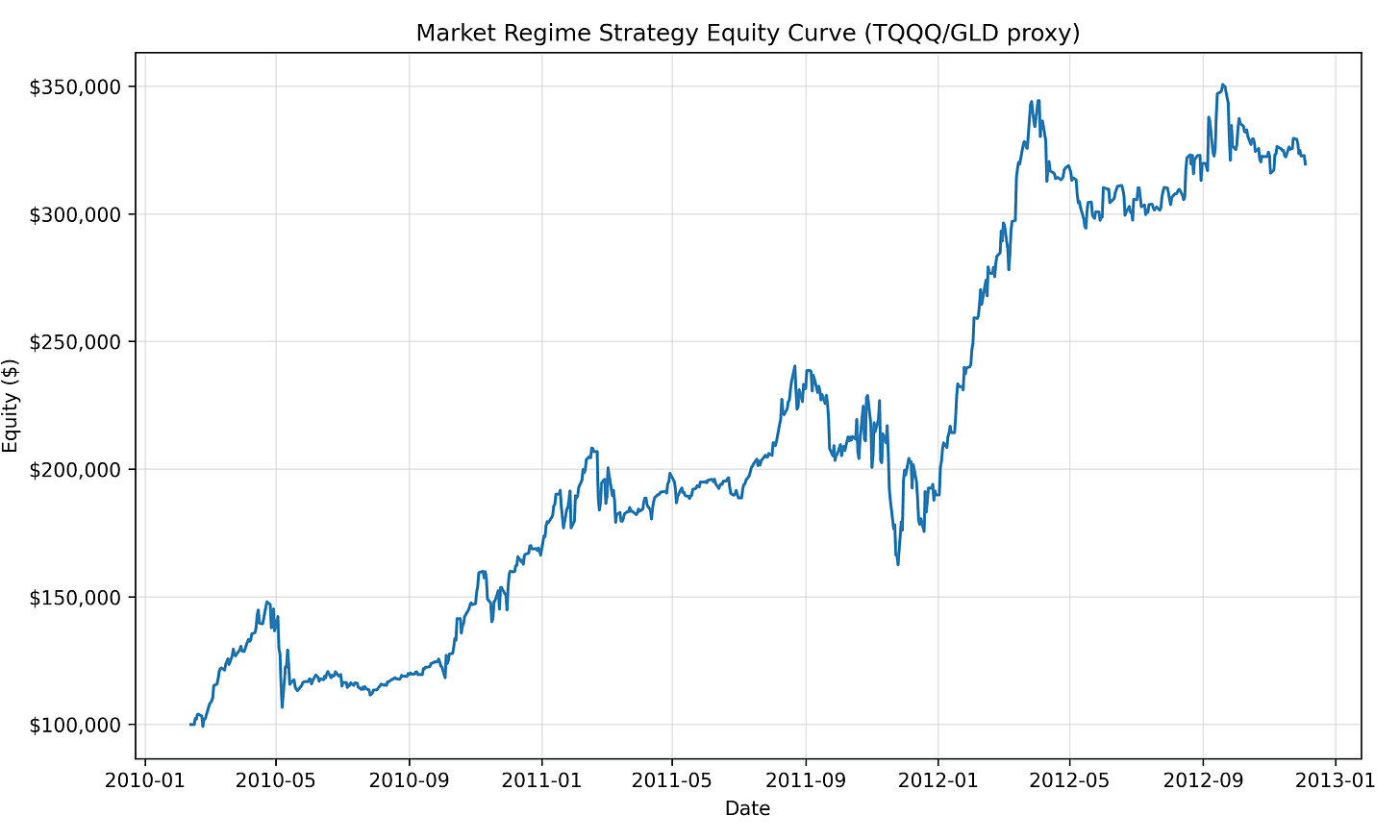
How the Market Regime model navigated the Flash Crash, Eurozone crisis, and QE2 era with +219% returns over nearly three years.
Read →
This strategy measures the market's current environment — specifically whether risk-on assets or risk-off assets are showing leadership — and aligns positioning accordingly.
Read →